
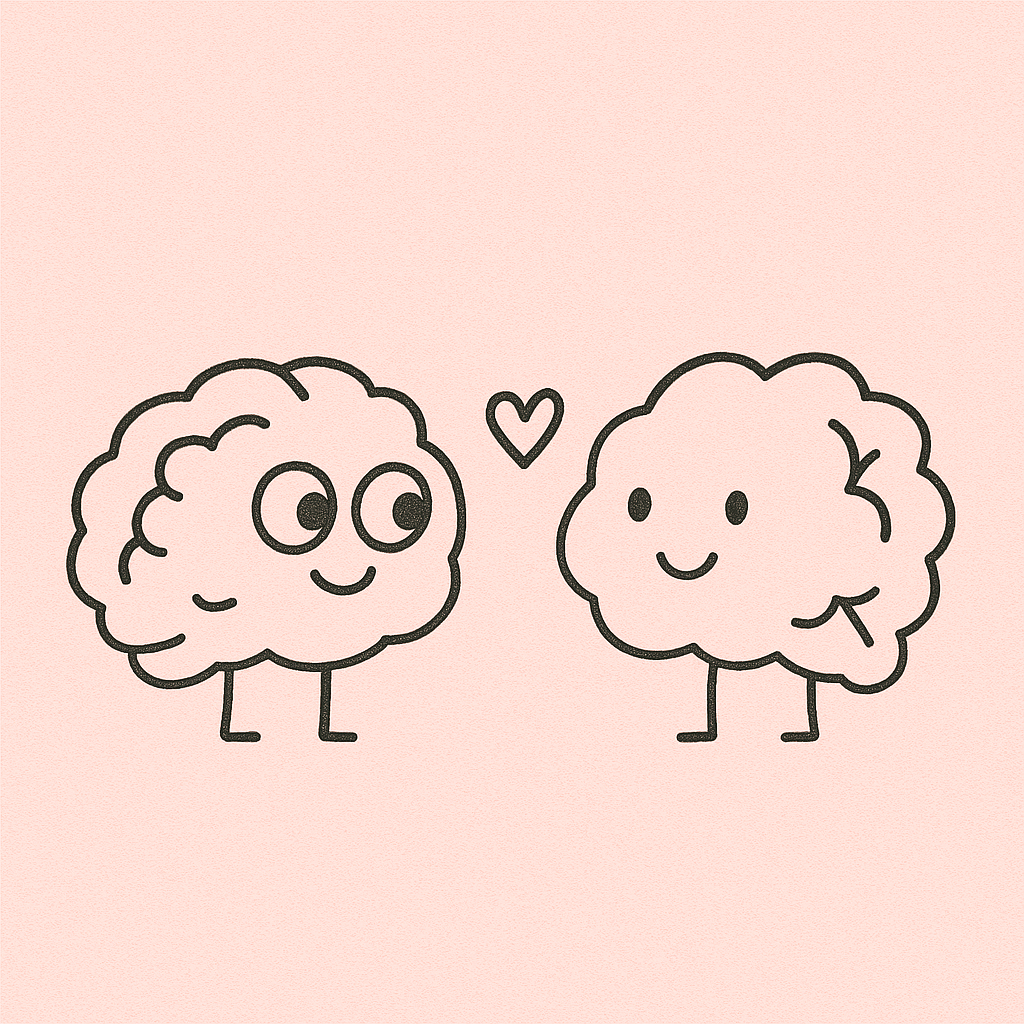
Understanding the emotional landscapes of different brains
1. Communication Styles May Not Align
Neurodivergent people (like those with ADHD, autism, or sensory processing differences) may process and express emotions differently. What seems like “overreacting” to one person might be a sensory overload to another. What seems like “detachment” might just be a need for time to process.
Try This: Instead of assuming intention, ask questions like, “How are you experiencing this right now?” or “Do you need space or support?”
2. Emotional Regulation May Look Different
Some neurodivergent people may struggle with emotional dysregulation—feeling things more intensely or having trouble calming down. Others may “shut down” or go nonverbal under stress. These responses aren’t choices; they’re nervous system responses.
Try This: Learn your partner’s (or your own) regulation tools—weighted blankets, stim toys, breathwork, timeouts, etc.—and build them into your routine.
3. Needs Can Clash—And That’s Okay
One person may crave routine; another may thrive in spontaneity. One may need blunt honesty; another may need softened delivery. Relationships between mixed neurotypes require flexibility—and grace.
Try This: Create a “relationship playbook” where each person lists their:
- Sensory triggers
- Communication preferences
- Emotional regulation strategies
- Apologies or repair styles


4. Shame and Masking Can Run Deep
Try This: Foster safe space. Affirm each other’s differences. Remind each other, “You don’t have to perform here—you just have to be real.”
Final Thought:
Neurodivergence doesn’t mean less capable of love—it often means more aware of its layers. With emotional intelligence, curiosity, and compassion, every type of brain can build beautiful, connected relationships.
Dr. Temple Grandin
Comments ( 1 )
Comments are closed.
Id elit ultricies leo nostra aliquam. Pretium nam convallis viverra sollicitudin gravida praesent mattis vitae. Faucibus fringilla eu pulvinar ultricies tristique. Massa posuere integer morbi ante mus laoreet, ligula vel. Adipiscing eleifend amet pharetra laoreet, sem nullam.